
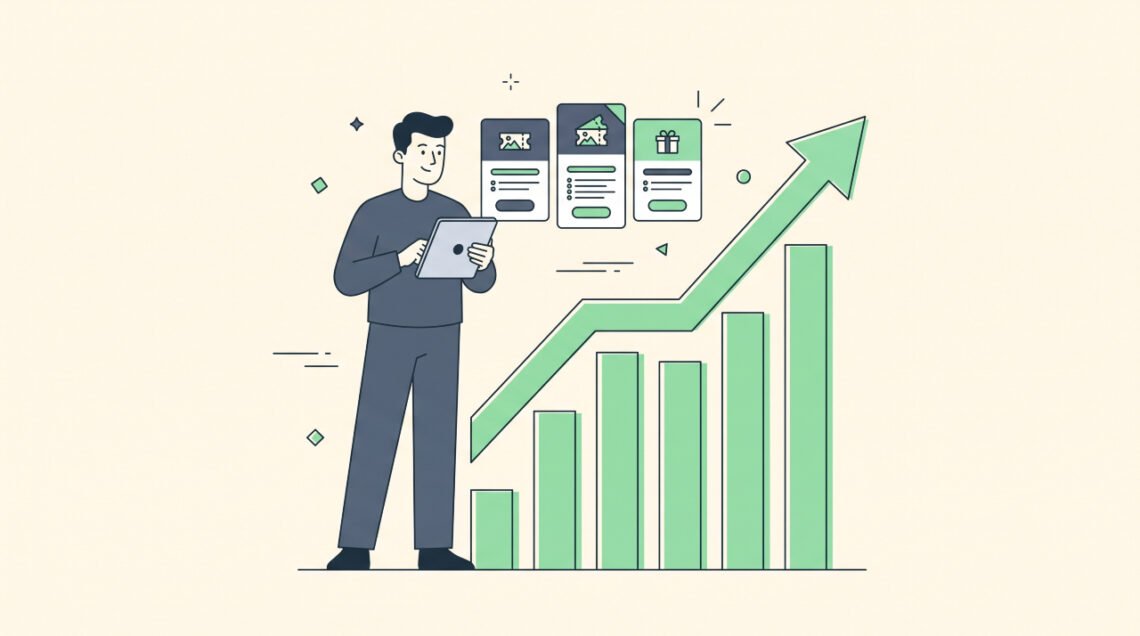
You pick a round number out of thin air, set your ticket price at $50, and announce your event online. Three weeks later, ticket sales cover your venue rental, but caterer invoices, staff wages, and merchant fees leave you in the negative.
Learning how to price event tickets for maximum profit requires building a financial model instead of guessing what attendees want to pay. Most unprofitable events fail for one of two reasons: organizers set prices too low to cover operational overhead, or they use a flat single-price model that ignores high-value VIP buyers.
This strategic guide details how to calculate your break-even floor price, structure multi-tier ticket offers, use price anchoring, and adjust pricing schedules to maximize gross event revenue.
What You’ll Need
Before establishing your ticket pricing structure, gather these financial figures and operational details:
- Complete fixed cost list including venue rental, permits, staging, audio-visual gear, and insurance
- Variable cost estimates per attendee including catering, printed lanyards, gift bags, and merchant fees
- Venue capacity limits and realistic target attendance numbers (typically 70% to 85% of total capacity)
- Competitor pricing data from three similar events in your region or industry
- Access to your ticketing platform configuration portal for tier creation
- Merchant fee percentages from your credit card processor (typically 2.5% to 3.5% plus per-ticket fees)
Step-by-Step Guide to Pricing Event Tickets for Maximum Profit
Follow these eight operational steps to construct a high-converting, profitable ticket pricing model.
Step 1: Calculate Your Total Financial Floor Price
Never set a public ticket price until you establish your minimum break-even floor. Your floor price is the absolute lowest average revenue per ticket required to cover all expenses without losing money.
Calculate your financial floor using this formula: add all fixed costs to your total variable costs, then divide by your expected minimum attendance. For example, if your fixed costs are 10,000, variable costs equal 10 per person, and you expect 400 attendees, your total expense is 14,000.Dividing14,000 by 400 gives a floor price of $35 per ticket.
Always build a 15% contingency buffer into your expense totals. Unexpected security fees, staffing overtime, or equipment replacements quickly erase thin margins.
A correct financial calculation gives you an exact numerical floor price that guarantees your event breaks even even if ticket sales reach only 75% of your target volume.
Step 2: Establish Your Target Profit Margin
Once you know your break-even floor price, add your target profit margin. Events operated by commercial organizers typically aim for a 20% to 35% profit margin above total operating costs.
If your floor price is 35perticketandyourtargetmarginis2535 by 1.25 to reach a base target price of 43.75(rounded up to 45 for clean consumer pricing). This margin provides profit for your business or builds reserves for future event production.
For non-profit organizations or educational institutions, profit margins are often reinvested into community programs or future venue upgrades. If your event serves academic audiences, read our guide on digital ticketing for schools to learn how institutional budget structures operate.
A properly set profit margin ensures every sold ticket contributes directly to net income rather than barely covering baseline costs.
Step 3: Create a Three-Tier Pricing Architecture
A single flat ticket price leaves money on the table. Some attendees want the lowest entry cost possible, while corporate sponsors and dedicated fans willingly pay double or triple for premium access and convenience.
Structure your event with three distinct pricing tiers:
- Early-Bird Tier (20% to 25% of Inventory): Priced 15% to 20% below your standard rate. This tier creates immediate launch momentum and generates early cash flow.
- Standard Tier (50% to 60% of Inventory): Set at your calculated target profit price. This tier represents your main volume driver.
- VIP / Premium Tier (15% to 20% of Inventory): Priced 100% to 150% higher than your standard rate. Include exclusive perks such as reserved front-row seating, private lounge access, or early entry.
According to research on commercial event attendance published in PCMA’s meeting revenue research, introducing a well-defined VIP tier increases total event revenue by 18% to 24% without increasing total attendee volume.
A successful tier structure features clear feature differentiation between levels, making the value of higher tiers obvious to buyers.

Step 4: Apply Price Anchoring and Contrast
Buyer perception of price depends heavily on context. When a visitor sees a 49standardticketnexttoa199 VIP pass, the $49 price feels reasonable by comparison. This psychological effect is called price anchoring.
Display your highest-priced tier on the far left or top of your ticket selection table. When potential buyers evaluate your options, their eyes lock onto the high anchor price first. As they scroll down to the standard tier, the lower price feels like strong value.
Highlight your standard or recommended tier with a distinct colored border or a “Most Popular” tag. This guides undecided visitors toward your primary volume option.
Effective price anchoring results in higher conversion rates for your standard and VIP tiers while reducing buyer hesitation at checkout.
Step 5: Build Genuine Scarcity and Time Deadlines
Urgency drives action. Potential attendees who believe a ticket price will remain available indefinitely frequently put off buying until the week of the event. Many forget or change plans, resulting in missed sales.
Set strict, non-negotiable deadlines for your discount tiers. Define your Early-Bird phase by both date and ticket quantity (for example, “Expires June 15 or when 100 tickets sell out”). Display a live inventory counter on your checkout page showing remaining tickets in real time.
When an Early-Bird tier expires, raise the price as promised. Extending discount deadlines when sales move slowly destroys buyer trust and eliminates urgency for future event announcements.
Proper scarcity management produces distinct sales spikes on launch day and during the final 48 hours before early-bird deadlines expire.
Step 6: Account for Merchant and Platform Processing Fees
A frequent financial mistake is ignoring payment gateway and ticketing platform fees when calculating ticket prices. If your processor charges 3% plus 1 per ticket, a $ 50 sale yields only 47.50 in net revenue. On 1,000 tickets, that 2,500 gap erases your margin.
Decide to pass processing fees to the buyer or absorb them into your face value ticket price:
- Pass Fees to Buyer: Display the base price as 50, with fees 2.50) added at checkout. This keeps your advertised price low but can cause slight checkout drop-off.
- Absorb Fees into Ticket Price: Set the advertised price at $53. This simplifies checkout and increases conversion rates, provided you factor fee costs into your financial floor calculation.
For an in-depth breakdown of configuring fee settings inside your platform, review our full ticketing platform overview.
Factoring fees into your initial price calculation ensures your net payout matches your projected financial model exactly.
Step 7: Offer Add-Ons and Up-Sells at Checkout
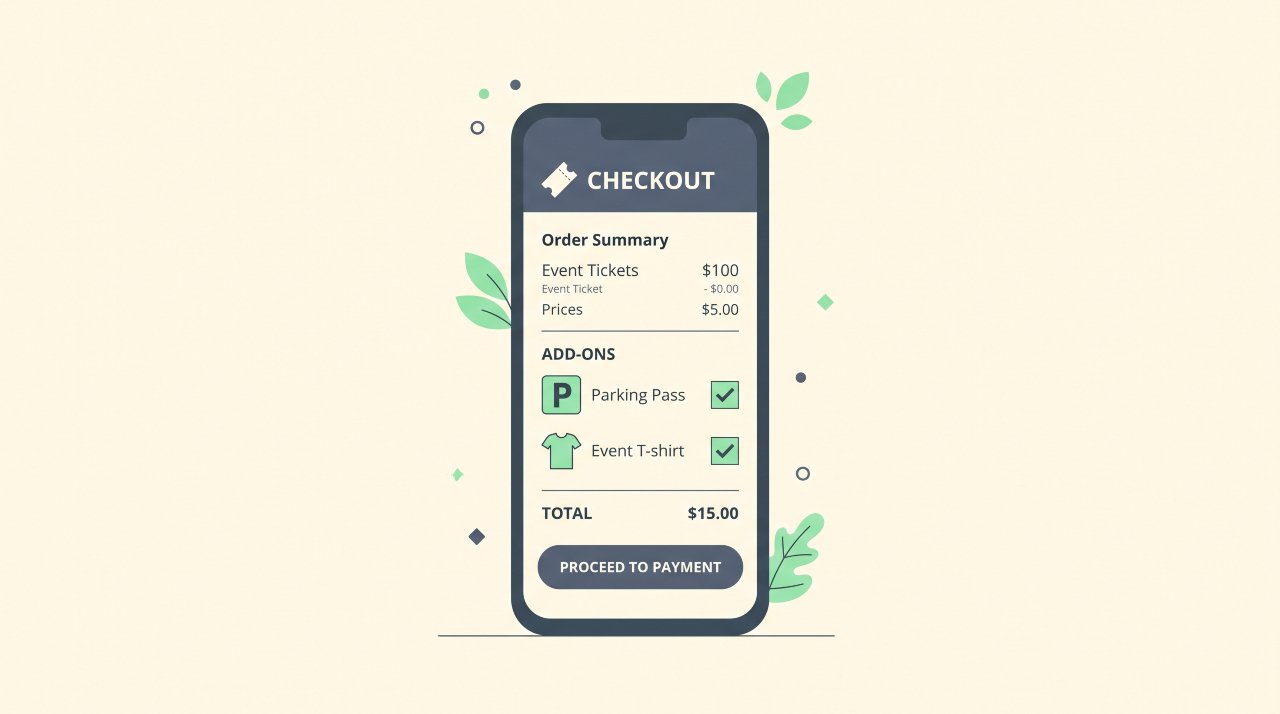
Maximizing ticket revenue is not limited to entry passes. Offering complementary add-on products during the checkout process increases your average order value (AOV) significantly.
Integrate relevant add-on items directly into your ticket buying flow:
- Pre-purchased event merchandise (t-shirts, hats, poster prints)
- Parking passes or shuttle bus vouchers
- Pre-ordered meal vouchers or drink packages
- Workshop access or post-event recording access
According to industry data from Eventbrite’s commercial event pricing survey, offering merchandise and parking add-ons during ticket checkout increases gross attendee spend by 8 to14 per order across consumer events.
A working add-on setup shows 15% to 25% of ticket buyers adding at least one extra item to their cart before completing payment.
Step 8: Monitor Sales Velocity and Adjust Dynamic Pricing
Static ticket pricing that remains unchanged from launch to event day misses revenue opportunities. Monitor your daily sales velocity to adjust your promotional focus and inventory allocations.
If your Early-Bird tier sells out in twenty-four hours, demand is higher than anticipated. You can safely increase your standard tier price by 5% to 10% or expand your VIP allocation. If sales stall mid-campaign, launch a targeted group ticket bundle (“Buy 4, Get 1 Free”) rather than discounting single tickets.
For technical guidance on managing live ticket inventory and automated price switches across entry channels, read our playbook on digital ticketing systems for live events.
Dynamic tracking allows your team to maximize net revenue by capturing high demand early and correcting slow periods without cheapening your brand.
Ticket Tier Distribution and Pricing Breakdown
Use this standard inventory allocation model to structure your ticket tiers for maximum gross revenue.
| Ticket Tier | Inventory Share | Pricing Formula | Target Buyer Segment | Operational Perks Included |
|---|---|---|---|---|
| Early-Bird Pass | 20% to 25% | Floor Price + 10% Margin | Superfans, early planners, price-sensitive buyers | Standard event entry, early badge pickup |
| Standard Pass | 50% to 60% | Floor Price + 25% Margin | General attendees, late-stage buyers | Standard event entry, main floor access |
| VIP Pass | 15% to 20% | Floor Price + 120% Margin | Executives, sponsors, premium experience seekers | Express entry lane, reserved seating, VIP lounge |
| Group Pass (4+) | 10% to 15% | Standard Price – 15% Bundle | Corporate teams, friends, organization groups | Standard entry, single combined billing |
| Last-Chance Pass | Remaining 5% | Standard Price + 20% | Last-minute walk-ins, impulse attendees | Standard entry, subject to remaining capacity |
Common Pitfalls to Avoid
Avoid these frequent pricing errors to protect your event margins and brand reputation.
| Pitfall | Financial Risk | Corrective Action |
|---|---|---|
| Pricing based on competitor rates only | Your operating costs may exceed competitor budgets | Calculate your own break-even floor before reviewing market rates |
| Offering a single flat ticket price | Misses high-margin VIP revenue opportunities | Always offer at least three distinct tiers (Early-Bird, Standard, VIP) |
| Extending expired Early-Bird deadlines | Destroys urgency and buyer trust for future events | Let deadlines expire as scheduled and raise prices to standard rates |
| Ignoring credit card processing fees | Erases 3% to 5% of gross profit margin | Absorb or pass fees deliberately in your initial pricing model |
| Discounting single tickets late in the campaign | Angers early buyers who paid full price | Use group bundles or added-value bonuses instead of single-ticket price drops |
Frequently Asked Questions
How do I know if my event ticket price is too high?
If your event page receives high traffic but has a checkout conversion rate below 2%, your ticket price may exceed perceived value, or your checkout process contains too much friction. Conduct a quick poll or compare your offer inclusions against similar regional events to identify the gap.
Should I include processing fees in the advertised ticket price?
Absorbing fees into the advertised price (e.g., advertising $55 all-inclusive) generally yields higher checkout completion rates than adding fees at the final payment screen. If you absorb fees, ensure your initial calculation accounts for processor percentages.
What percentage discount should an Early-Bird ticket offer?
A standard Early-Bird discount ranges between 15% and 20% below your standard ticket price. Offering less than 10% fails to motivate early action, while discounting over 30% risks undermining your perceived event value and squeezing profit margins.
How do I price an event if it is my first time hosting?
Start by calculating your strict break-even floor based on quotes from your venue, caterer, and suppliers. Add a conservative 20% margin, then benchmark that figure against three comparable local events to ensure your pricing fits market expectations.
Summary
Pricing event tickets for maximum profit requires establishing a firm financial floor, adding a sustainable profit margin, and deploying a three-tier pricing model. Use price anchoring, strict scarcity deadlines, and checkout add-ons to increase your total order value.
Track your sales velocity weekly, protect your margins against uncounted processing fees, and avoid late single-ticket discounting. A structured, data-driven pricing plan guarantees financial stability while maximizing total event revenue.