
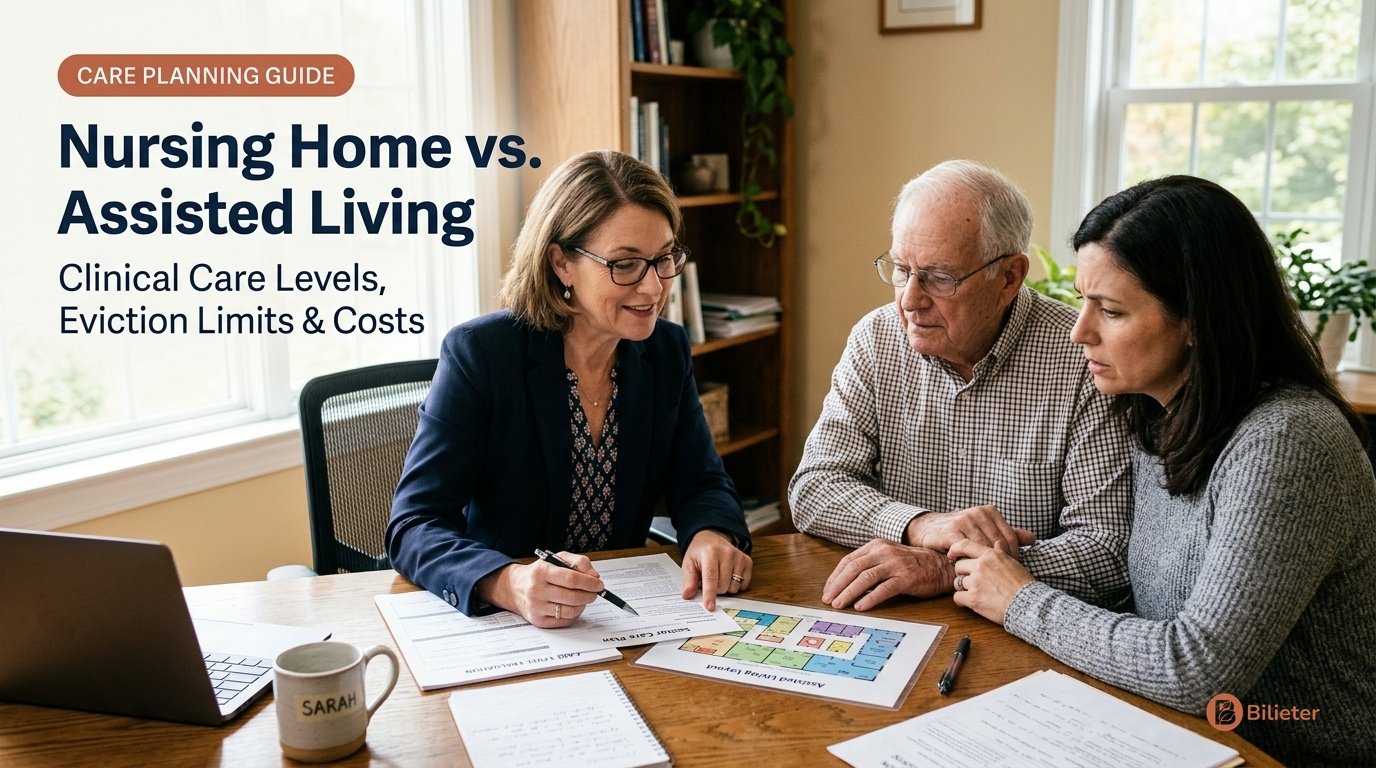
When an aging parent suffers a serious medical event or reaches a tipping point of physical frailty, adult children are abruptly thrust into the confusing terminology of senior care. In hospital discharge corridors, social workers and physicians frequently speak in quick shorthand, recommending either a skilled nursing facility or residential assisted living.
To families unfamiliar with healthcare licensing, the two terms sound almost identical. Many assume a nursing home is simply an older, less glamorous version of assisted living. In reality, nursing home vs assisted living represents two completely separate worlds of care, differing fundamentally in clinical capabilities, legal discharge authority, daily living environments, and monthly costs ($9,200 per month compared to $4,800 per month). Choosing the wrong environment can result in traumatic emergency evictions or unnecessary financial ruin.
Quick Answer: The core difference between a nursing home and assisted living centers on medical intensity and clinical oversight. Assisted living provides private residential apartment living, dining services, and non-medical custodial help with Activities of Daily Living (bathing, dressing, medication reminders) for seniors who are medically stable. In contrast, a nursing home (Skilled Nursing Facility) is a licensed clinical medical environment providing round-the-clock care from Registered Nurses, complex wound care, intravenous therapies, and physical rehabilitation for bed-bound seniors or individuals with severe chronic illness. Monthly nursing homes average $8,500 to $10,500 and are funded primarily by Medicaid after spend-down, while assisted living averages $4,500 to $6,500 and is predominantly paid out-of-pocket by families.
Key Takeaways for Families
- Clinical Licensing Boundaries: Assisted living communities cannot legally admit or retain residents who require 24/7 skilled nursing, ongoing IV therapy, or two-person mechanical transfers.
- The Cost Gulf: Nursing homes cost almost double assisted living, reflecting intensive licensed medical staffing ratios (1 nurse to 8-10 residents vs. 1 aide to 15-20 residents).
- Medicaid Funding Rules: Medicaid is a federal entitlement that covers 100% of nursing home care once personal assets drop below $2,000, whereas assisted living Medicaid coverage is restricted to limited, state-capped waiver slots.
- Apartment Autonomy vs. Hospital Setting: Assisted living features private locking suites with kitchenettes and social calendars; nursing homes feature semi-private clinical rooms with hospital beds and medical call lights.
The 5 Defining Differences Between Nursing Homes and Assisted Living
To evaluate which setting matches your parent’s immediate needs, examine the five structural dividing lines established by state health departments and geriatric medical standards:
1. Medical Oversight and Staffing Models
The single biggest operational difference is who is in the building at 3:00 AM. According to the National Institute on Aging residential care framework, understanding the distinction between custodial support and licensed clinical intervention is essential for protecting a vulnerable senior’s safety:
- In a Nursing Home: Federal regulations mandate that a licensed Registered Nurse (RN) or Licensed Practical Nurse (LPN) must be on duty 24 hours a day, 7 days a week. Staff physicians serve as medical directors, making formal rounds and ordering laboratory work, diagnostic imaging, and complex pharmacology changes directly on site.
- In Assisted Living: Staffing consists primarily of non-licensed Certified Nursing Assistants (CNAs) and certified medication technicians. While an RN may supervise the wellness department during weekday business hours, overnight shifts are staffed exclusively by personal care aides. If a resident suffers an acute medical emergency, assisted living staff must dial 911 for an ambulance.
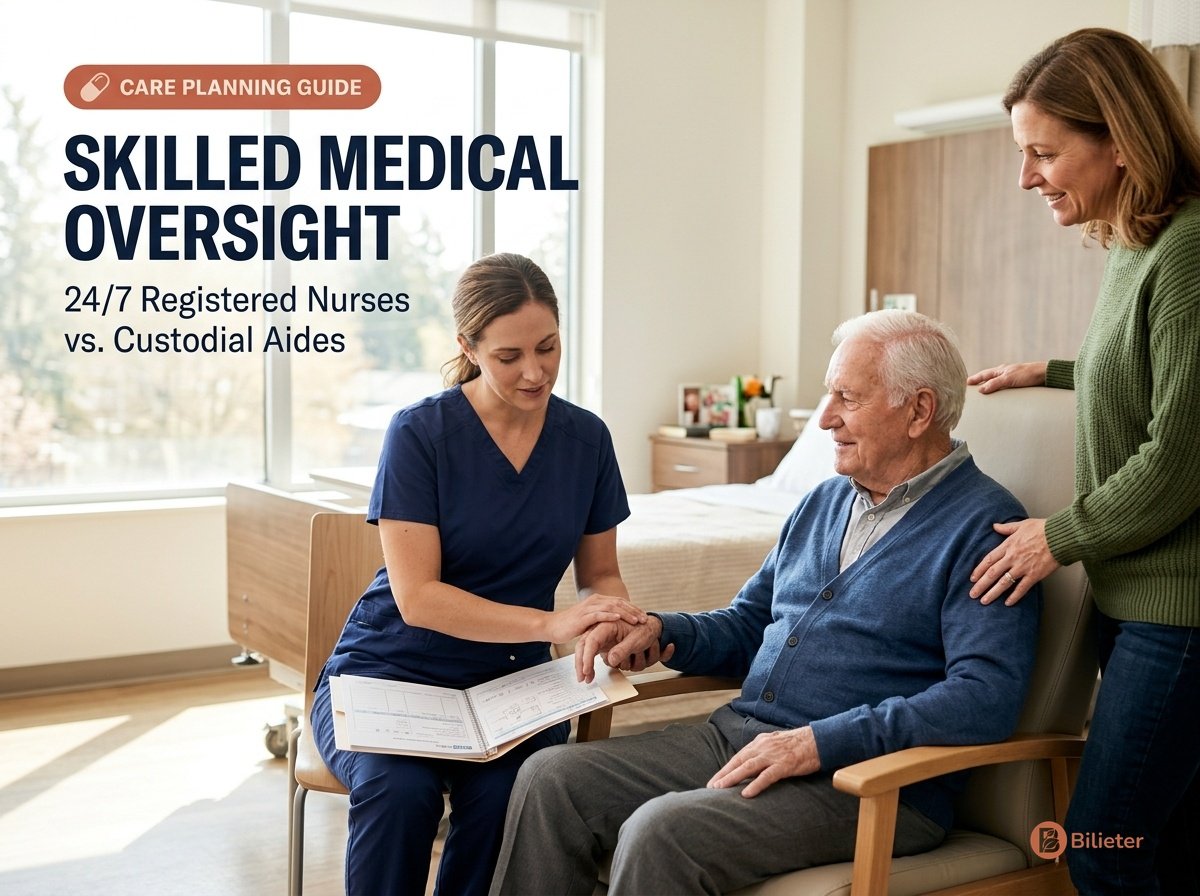
Figure 1: Skilled nursing facilities provide round-the-clock licensed clinical oversight for unstable medical conditions, complex wound care, and intensive rehabilitation.
2. Living Environments: Private Apartment vs. Clinical Convalescence
The daily sensory experience of each setting is vastly different:
- Assisted Living (Social and Residential): Residents live in private studio, one-bedroom, or two-bedroom apartments with their own front door, private bathroom, and small kitchenette. The focus is hospitality and dignity: restaurant-style dining rooms, libraries, art studios, and landscaped outdoor walking courtyards. Residents maintain their own daily schedule and decorate with their own familiar furniture.
- Nursing Home (Clinical and Institutional): The physical layout mirrors a hospital convalescent wing. Most residents share a semi-private room with a roommate, separated by a privacy curtain. Rooms feature hospital-grade electric beds, vinyl clinical flooring, wall-mounted oxygen ports, and emergency pull cords. Dining and socializing occur in central congregate day rooms under medical supervision.
3. Physical Transfer and ADL Thresholds
State licensing laws strictly dictate what personal care assisted living communities are permitted to deliver:
- One-Person Assist: Assisted living is designed for seniors who can bear their own weight. A care aide can provide stand-by assistance or physical guiding (one-person transfer) to help a senior rise from a chair or steady themselves into a shower.
- Two-Person Mechanical Lift: When a senior becomes completely non-ambulatory, bed-bound, or unable to bear weight, transferring them safely requires two staff members operating a mechanical lift (such as a Hoyer lift). In the vast majority of states, assisted living communities are legally prohibited from admitting or retaining residents who require continuous two-person transfers. Those individuals must reside in a skilled nursing facility.
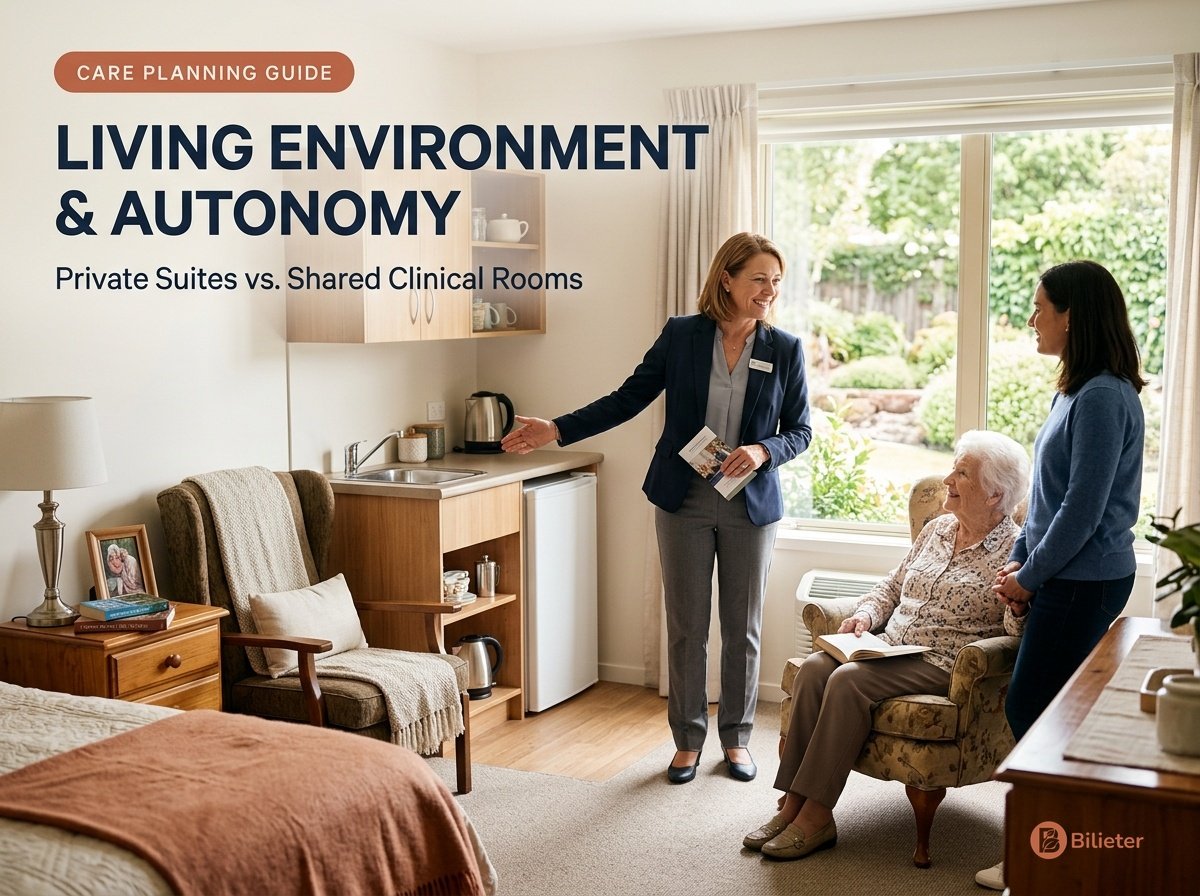
Figure 2: Assisted living emphasizes personal autonomy and private living spaces, with staff assisting with meals, housekeeping, and personal care.
4. Legal Discharge and Eviction Triggers
Families are often stunned when an assisted living community issues an involuntary 30-day discharge notice. Under state administrative codes, an assisted living community must issue an eviction notice if a resident develops any of the following clinical conditions:
- Stage 3 or Stage 4 pressure ulcers (deep decubitus bedsores requiring sterile surgical debridement).
- Need for continuous intravenous (IV) therapy or tracheostomy care.
- Severe wandering or combative behaviors that threaten other residents.
- Inability to evacuate the building during a fire emergency without multiple staff members.
In contrast, nursing homes are medically equipped and legally licensed to manage all of these complex conditions through end of life.
If your parent’s primary challenge is wandering or memory loss rather than acute physical illness, read our detailed comparison of assisted living vs memory care to review secure perimeter locks and sensory calming design.
If cognitive decline is beginning to affect basic safety or medication compliance, review the behavioral indicators in our guide on when is it time for memory care before an unexpected home crisis forces an emergency transfer.
Side-by-Side Comparison Matrix
Review the detailed comparison matrix below to examine differences in staffing, costs, transfer capabilities, and funding across both environments.
| Comparison Feature | Assisted Living Community | Nursing Home (Skilled Nursing) |
|---|---|---|
| Primary Care Philosophy | Residential autonomy, social engagement, and custodial support. | 24/7 clinical healthcare, convalescence, and medical stability. |
| Nursing Staff on Duty | Med-techs and aides on site; RN on call or daytime hours only. | Licensed RN or LPN physically present 24 hours a day, 7 days a week. |
| Living Accommodations | Private apartments (studio, 1BR) with lockable doors and kitchenettes. | Semi-private hospital-style rooms shared with a roommate. |
| Mobility / Transfer Limit | 1-person stand-by assist; resident must be able to bear weight. | 2-person transfers, full mechanical Hoyer lifts, bed-bound care. |
| Average Monthly Cost | $4,500 to $6,500 per month (base rent plus care points). | $8,500 to $10,500 per month ($100,000+ per year). |
| Medicare Coverage | $0 for room and board; pays only external doctor visits and therapy. | Up to 100 days of short-term rehab following a 3-day hospital stay. |
| Medicaid Coverage | Optional state HCBS waivers only; very limited beds and waitlists. | Full statutory entitlement once liquid assets are spent below $2,000. |
| Typical Length of Stay | 2 to 4 years (often transitioning to memory care or nursing home). | Short-term rehab (3-6 weeks) or long-term terminal care (1-2 years). |
The Financial Equation: How Families Pay for Each
Understanding how care is financed represents the most urgent reality check for families. The payment mechanisms between the two settings could not be more divergent:
How Assisted Living Is Funded
Assisted living is almost universally private pay. Families fund the $4,500 to $6,500 monthly expense using:
- Sale proceeds from the family home or investment liquidations.
- Social Security monthly income and private pension disbursements.
- Long-Term Care (LTC) Insurance policies that trigger upon failure of two Activities of Daily Living.
- Veterans Aid and Attendance pensions (providing up to $2,400 to $2,700 monthly for qualifying wartime veterans and surviving spouses).
To examine why federal insurance excludes residential rent, read our complete analysis on does Medicare cover assisted living.
How Nursing Homes Are Funded
Because nursing homes average more than $100,000 per year, very few middle-class families can pay privately for more than 12 to 18 months. When personal savings are exhausted, Medicaid long-term services and supports become the primary funding safety net. Medicaid is a joint federal and state program that covers 100% of nursing home room, board, and medical care, provided the applicant meets strict income caps and countable asset limits (typically under $2,000).
Under Part A, the Medicare skilled nursing facility benefit rules mandate a qualifying three-day inpatient hospital stay prior to admission, covering up to 100 days of rehabilitative therapy. The first 20 days are covered in full, while days 21 through 100 require a substantial daily coinsurance copay. Medicare never funds long-term custodial room and board in either setting.
The 5-Year Look-Back Warning: State Medicaid caseworkers inspect all financial records, deeds, and asset gifts made within 60 months of application. Transferring a parent’s house or bank accounts to adult children during this window triggers severe penalty periods of ineligibility. Always consult an accredited elder law attorney before spending down assets.
If you are coordinating care alone while managing family conflicts, explore our practical recovery guide on caregiver burnout symptoms and recovery to review boundary scripts and respite care options.
5 Critical Inspection Checks Before Signing a Facility Contract
Before signing an admission agreement or paying non-refundable community fees, conduct these five physical checks on site:
- Check Direct-Care Staff Turnover Rates: Ask the admissions director for their annual nursing retention percentage. High turnover among frontline aides directly correlates with missed medication passes, delayed call light responses, and skin breakdown. Look for facilities where primary caregivers have been on staff for at least two years.
- Verify the Level-of-Care Point System: Assisted living communities quote an attractive base rent, but assess additional monthly fees based on care points. Ask for the exact scoring sheet that dictates when assistance with bathing or medication management moves from Tier 1 to Tier 3. A $4,500 base rate can escalate to $7,200 per month within weeks if points accumulate rapidly.
- Review State Inspection Survey Deficiencies: State health departments conduct unannounced annual audits of every licensed nursing home and assisted living facility. Request the most recent inspection survey booklet from the front desk, or verify records online through state regulatory portals. Pay close attention to citations involving medication errors, fall prevention failures, or physical abuse complaints.
- Perform the Dining Room Sensory Test: Visit during an unscheduled lunch or dinner service. Note whether meals are served hot, whether residents are eating socially or sitting in isolated silence, and whether aides patiently assist slow eaters or rush plates away. Meal quality is a reliable proxy for administrative respect toward residents.
- Clarify the Hospital Readmission Retention Policy: If a resident requires emergency hospitalization for pneumonia or a fracture, ask how long the facility holds their private apartment or nursing bed. Some assisted living facilities charge full daily rent while the resident is hospitalized, and may require a new clinical assessment before permitting the resident to return.
Decision Framework: Which Setting Does Your Parent Need?
To determine the appropriate care setting, walk through this 4-part clinical checklist with your parent’s primary care physician:
- The Medical Stability Check: Does your parent have complex medical conditions requiring daily clinical adjustments (such as insulin titration, IV antibiotics, stage 3 wounds, or tube feedings)? If yes, a nursing home is required. If medical conditions are stable and managed by oral pills, assisted living is appropriate.
- The Weight-Bearing Mobility Check: Can your parent stand and pivot with the guiding support of one person? If yes, assisted living can accommodate them. If they are bed-bound or require two staff members and a mechanical hoist, a nursing home is mandatory.
- The Cognitive Progression Check: Is physical frailty accompanied by wandering or severe agitation? Check their functional milestone on the stages of dementia timeline. Seniors at FAST Stage 6 or 7 need specialized memory care or skilled nursing rather than standard assisted living.
- The Home Adaptation Alternative: If cognitive function is intact and your parent simply fears falling, professional modifications may allow them to remain home. Review our 48-hour guide on fall prevention for elderly at home before committing to a residential move.
Frequently Asked Questions
Can an assisted living facility kick my parent out if their care needs increase?
Yes. Assisted living communities are residential facilities bound by strict state health department licensing. If a resident develops needs that exceed the facility’s licensed care level, such as requiring two-person mechanical transfers, developing severe bedsores, or requiring continuous IV therapy, the community is legally mandated to issue a formal 30-day discharge notice.
Does Medicare pay for a nursing home or assisted living?
Medicare never pays for residential room and board in assisted living or long-term nursing homes. However, under Part A, Medicare covers up to 100 days of skilled rehabilitation in a certified nursing home following a qualifying 3-day inpatient hospital stay. The first 20 days are covered at 100%, while days 21 through 100 require a substantial daily coinsurance copay.
What is the difference between skilled nursing and assisted living?
Skilled nursing refers to licensed medical care delivered by Registered Nurses, physical therapists, and physicians in a clinical convalescent setting. Assisted living refers to non-medical personal care, such as assistance with showering, dressing, meals, and medication reminders, delivered in a private residential apartment setting.
Can you move directly from home into a nursing home?
Yes, but admission requires a physician’s medical assessment certifying that the individual meets the state’s clinical threshold for nursing facility level of care (NFLOC). Without a formal physician order documenting skilled medical needs, nursing facilities will not admit an applicant, and Medicaid will not approve funding.
How do I know if my parent needs memory care instead of a nursing home?
If your parent is physically mobile but suffers from wandering, confusion, and memory loss, a secure memory care community is ideal. If your parent is bed-bound, requires feeding tubes, or has severe medical complications alongside dementia, a skilled nursing facility is the appropriate setting.
Medical and Legal Disclaimer: The information provided in this guide is for educational and care planning purposes only. It does not constitute formal medical diagnosis, clinical treatment, or personalized elder law counsel. Consult a qualified physician for healthcare decisions and a licensed elder law attorney for Medicaid and estate planning.
Written by Franklin Alfano, Senior Care and Eldercare Operations Consultant at Bilieter. Franklin reviews senior living facilities, clinical care thresholds, and family caregiving frameworks to help adult children make confident, loving care decisions.
Learn more about our mission in About Us, review our rigorous Editorial Policy & Care Standards, read our Terms of Use & Senior Care Disclaimer, or reach out directly through our Contact Us page.